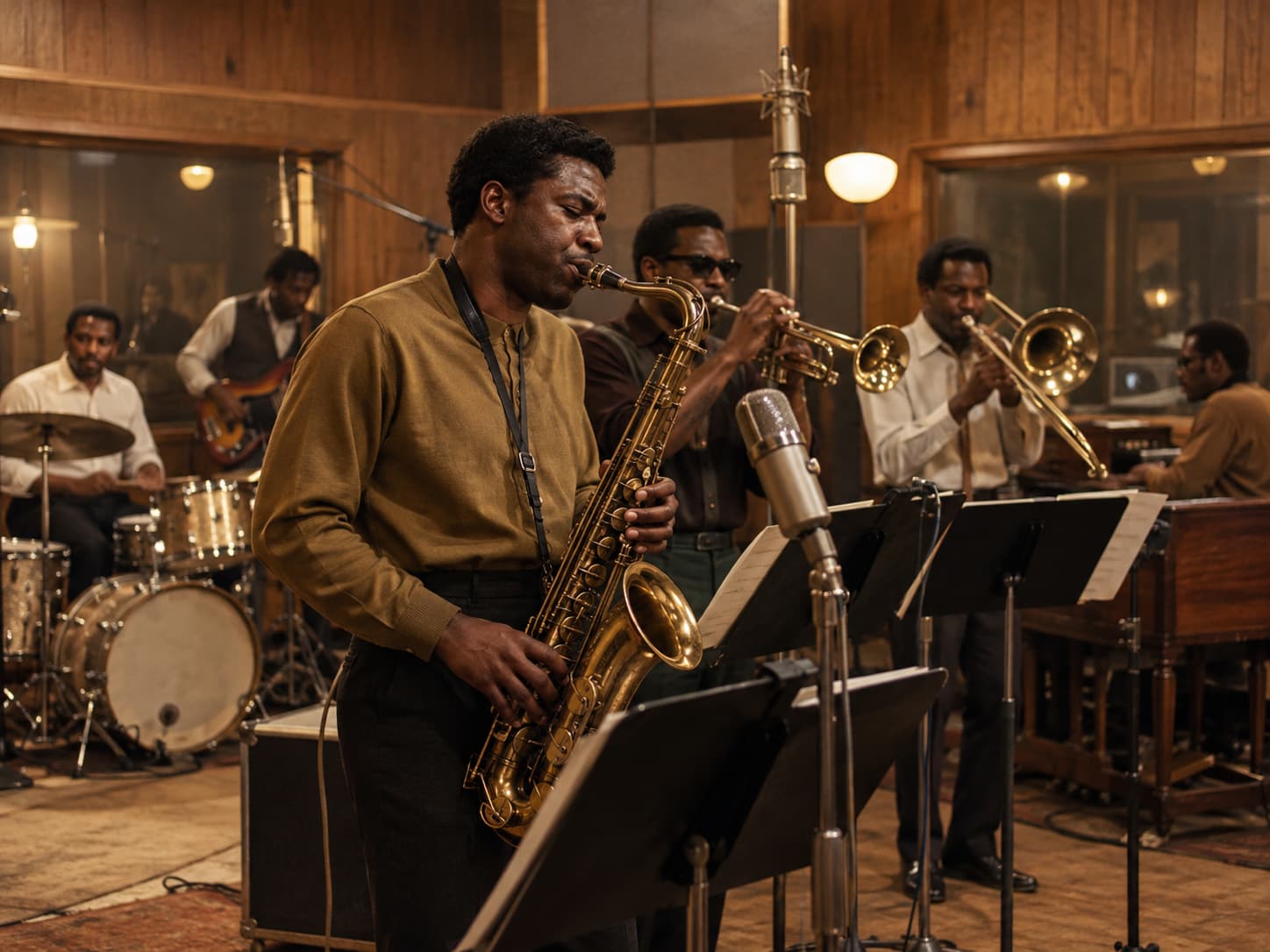
Listen to the opening seconds of Otis Redding’s “Try a Little Tenderness,” and the horns immediately establish the song’s mood. They play a gentle melodic phrase before the singer enters, creating a sense of anticipation that the rhythm section gradually transforms into excitement. That ability to shape a recording with just a few notes became one of the defining qualities of Memphis soul. At Stax Records, saxophones and trumpets were not decorative additions to a finished arrangement. They were part of the musical conversation, responding to singers, reinforcing rhythms and giving individual songs their recognizable character.
The Musicians Behind the Stax Horn Sound
The story begins with the Mar-Keys, a Memphis instrumental group whose 1961 single “Last Night” became one of the early successes associated with the label. The original lineup included saxophonists Charles “Packy” Axton and Don Nix, trumpeter Wayne Jackson and several musicians who later became closely associated with Booker T. & the M.G.’s. As personnel changed, the Mar-Keys name continued to represent the horn players contributing to Stax recordings.
Andrew Love, a tenor saxophonist raised in Memphis’s gospel tradition, joined the Stax musical community in 1965. His partnership with Jackson, whose instrument was the trumpet, developed into one of the most recognizable combinations in Southern soul. The two musicians had contrasting tonal qualities: Jackson contributed a bright, penetrating trumpet sound, while Love supplied the warmer and more flexible voice of the tenor saxophone. Together, they could produce a powerful ensemble sound without requiring a large orchestra.
Their work was connected to a wider group of studio musicians, including saxophonist Floyd Newman and trombonist Joe Arnold. These players contributed to recordings alongside the rhythm section, adapting their arrangements to the individual character of each singer. In 1969, Jackson and Love established the Memphis Horns as an independent professional partnership, allowing them to work beyond Stax. Their later recordings included collaborations with Al Green, Aretha Franklin, Elvis Presley and numerous other performers.
The distinction between the Mar-Keys and the Memphis Horns matters historically. The earlier name covered changing instrumental lineups, while the latter identified Jackson and Love’s professional partnership. Both belonged to the broader development of the Memphis horn sound.
Why the Saxophone Was Essential to the Arrangement
In a conventional big band, saxophones frequently carry elaborate melodic passages supported by brass instruments. Stax arrangements generally pursued a different goal. The horn players worked with compact phrases that could fit around a singer’s breathing, a drummer’s backbeat or a guitarist’s rhythmic accents. Their contribution depended less on the number of notes than on precisely when those notes appeared.
The tenor saxophone provided an important middle and lower register within the section. Its rounded tone blended naturally with the trumpet but could also become rough, forceful or almost vocal when the music demanded greater intensity. This flexibility made it particularly effective in arrangements influenced by gospel and rhythm and blues.
Short riffs were a central feature. A riff might consist of only a few notes repeated at carefully chosen points in the song. Instead of playing continuously, the horns often entered between vocal phrases, creating a musical answer to the singer. This call-and-response approach reflected the influence of African American church music, where a congregation or choir responds to the lead voice.
The relationship with the rhythm section was equally important. A saxophone phrase could reinforce the snare drum on beats two and four, enter unexpectedly between beats or sustain a note across a rhythmic change. These decisions created momentum without making the arrangement unnecessarily complicated. Silence was an essential part of the technique: leaving space allowed the next horn entrance to carry greater weight.
Three Recordings That Reveal the Stax Approach
Otis Redding’s 1966 recording of “Try a Little Tenderness” demonstrates how horns can control the emotional progression of a song. The opening is restrained, with a lyrical horn passage introducing the vocal performance. As the tempo and intensity develop, the instrumental responses become increasingly energetic. Redding participated closely in shaping the horn arrangements, often communicating musical ideas by singing them to the players. The result feels conversational rather than mechanically orchestrated.
Sam & Dave’s “Hold On, I’m Comin’,” released in 1966, offers a more rhythmically direct example. Its brass and saxophone figures establish an assertive musical identity, while the singers exchange short phrases in the gospel-influenced style encouraged by songwriters Isaac Hayes and David Porter. The horns strengthen those exchanges with concise accents. A saxophonist studying this recording should pay particular attention to the spaces between phrases. The rests are as important to the groove as the notes themselves.
Another useful example is “Soul Man,” recorded by Sam & Dave in 1967. Here the horn section adds rhythmic punctuation around the vocals and guitar rather than competing for attention. The arrangement demonstrates how a relatively small instrumental ensemble can create a dense, energetic texture through carefully coordinated entrances. Listening separately to the saxophone, trumpet, guitar and drums reveals how each contributes to the same rhythmic pattern.
These recordings also show why Stax cannot be reduced to a single horn formula. A slow introduction requires different phrasing and dynamics from an energetic dance number. The consistent element is the relationship between the instruments and the song, not a fixed set of musical tricks.
What Modern Saxophonists Can Learn From Memphis Soul
For students, the most useful starting point is careful listening rather than immediately attempting a complete transcription. Choose a short horn phrase from a Stax recording and identify where it begins relative to the drumbeat. Sing the phrase before playing it. This helps develop rhythmic memory and prevents the instrument’s mechanics from distracting attention from the musical idea.
Next, practise the phrase at a slower tempo, concentrating on articulation and note length. Soul saxophone playing often relies on a firm attack followed by a controlled release. Playing every note with identical emphasis can make the result sound stiff, even when the pitches are accurate. Experiment with subtle accents, changes in volume and slightly different note endings while preserving the original rhythm.
Playing with another musician introduces an additional challenge. A saxophonist and trumpeter must agree on entrances, phrasing and articulation if their lines are to sound like one section. The trumpet’s brighter tone can easily dominate, so the players need to balance their dynamics rather than simply match their volume. Recording a rehearsal can expose timing differences that are difficult to notice while performing.
Students can also benefit from learning to accompany a singer. Instead of filling every pause, try inserting a short phrase that answers the vocal melody without interrupting it. Begin with two or three notes, then experiment with register, rhythm and dynamics. This exercise develops the restraint required in ensemble music and encourages listening beyond one’s own instrument.
The lasting contribution of the Stax horn players lies in their understanding of musical purpose. Andrew Love and Wayne Jackson demonstrated that a memorable arrangement does not require continuous improvisation or technical display. A carefully placed saxophone phrase, supported by trumpet and rhythm section, can give a recording its identity. For musicians studying soul today, learning when to play, when to respond and when to remain silent is as valuable as mastering the notes themselves.